Features

The Imperial Executive: Adaptation or Democratic Risk?

The Imperial Executive: Adaptation or Democratic Risk?

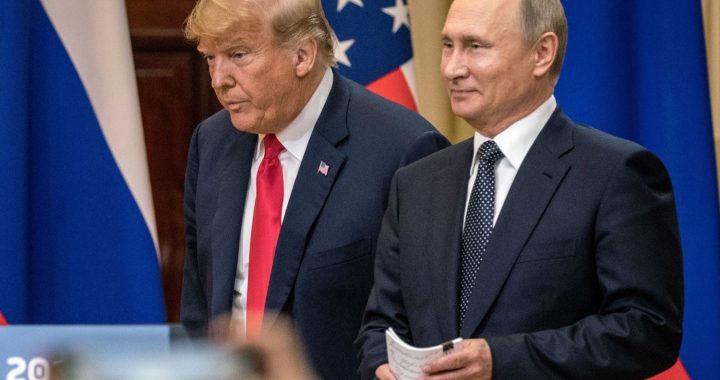
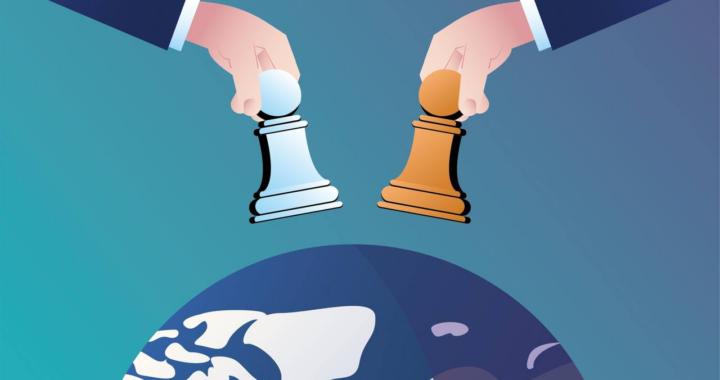
This article examines the rise of the “imperial executive” in modern democracies, arguing that the expansion of executive authority is less a deliberate erosion of democratic governance than an institutional adaptation to an increasingly volatile international system. As geopolitical competition, hybrid warfare, and technological acceleration compress decision-making timelines, executives have gained greater discretion in foreign policy, security, and crisis management. Through examples from the United States, Europe, India, and Israel, the article explores how strong executive leadership can enhance responsiveness and strategic coherence while also posing long-term risks to democratic accountability. Ultimately, it contends that the central challenge for modern democracies is not preventing the growth of executive power—an almost inevitable development—but ensuring that effective oversight and institutional safeguards evolve alongside it.


The new ‘safe’ risk: Gen Z are treating careers like startups

The new ‘safe’ risk: Gen Z are treating careers like startups

Traditional salaried jobs no longer automatically feel like the safest option for many Gen Z workers. With layoffs, inflation and AI reshaping early-career opportunities, alternative paths such as freelancing, real estate, influencer work, small business and gigs can appear more attractive because they offer greater autonomy and a stronger sense of control, even if income is less predictable.
Stability is increasingly being understood not just as a steady paycheck, but as having multiple income streams, transferable skills, personal networks and the ability to adapt. In that sense, treating a career like a startup reflects a broader shift in how security, risk and success are being defined in a more uncertain labour market.

Scrolling Through Life: When Connection Feels Like Isolation

Scrolling Through Life: When Connection Feels Like Isolation

In a world of tech innovation, social media has made communication easier than ever, but it has also led to an increase in social isolation. Despite promising connection, technology and social media often encourages shallow interactions, and constant comparisons and FOMO leads to feelings of inadequecy. Social media use has been a contributing factor to the global decline in mental health, due to the aforementioned feelings of inadequecy, leading to anxiety and loneliness. As a result of these feelings, people choose to socially withdraw, believing that online interactions are easier than physical ones.
byline: phebe lim

The Conveyor Belt that is the 21st century labour movement

The Conveyor Belt that is the 21st century labour movement

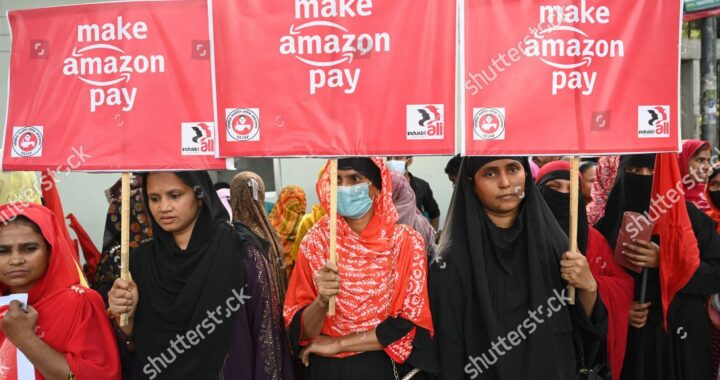
The article examines the shift from industry-specific strikes to a model of radical interdependence in the 21st-century labour movement. It explores the mechanics of Global Union Federations (GUFs) and the predicament of workers across a far-reaching conveyor belt. From the Dhaka textile factory to the office cubicle in Seattle, workers are transcending borders to battle a new flavour of feudalism.

Nothing Tastes as Decadent as Child Exploitation: Systemic Slavery in the Cocoa Industry

Nothing Tastes as Decadent as Child Exploitation: Systemic Slavery in the Cocoa Industry

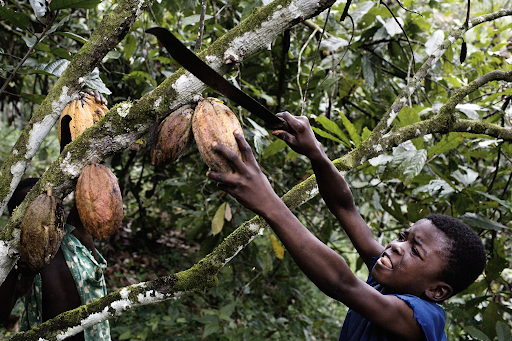
While chocolate is marketed as a quintessential symbol of affection and celebration, the US$123 billion industry hides a systemic human rights crisis. Concentrated in West Africa, production relies on a “poverty trap” where farmers receive less than 6% of the final product’s value. Until farmer income increases fourfold, child exploitation will remain an inherent ingredient in the global cocoa supply chain.

Turn the Volume Up: the Democratic Renaissance of 2025 America

Turn the Volume Up: the Democratic Renaissance of 2025 America

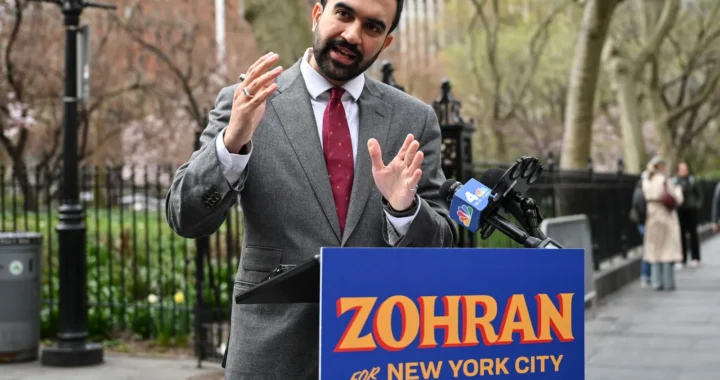
Zohran Mamdani’s historic NYC mayoral win marks a defiant shift from centrist tradition toward a bold, grassroots Democratic Socialism. By prioritizing working-class needs over corporate interests, his campaign successfully channeled deep-seated public frustration with the economic status quo. This victory now serves as a high-stakes litmus test for whether a progressive “renaissance” can reshape the future of the Democratic Party

Jackpot: The Capitalist World and Casual Gambling

Jackpot: The Capitalist World and Casual Gambling

Gambling isn’t just about casinos or lottery tickets anymore — it’s embedded in our everyday lives through seemingly innocent trends like blind boxes, trading card games, and loot boxes. Capitalising on the human attraction to luck, corporations come up with forms of casual gambling from collectible trading card games like Magic: The Gathering in the 90s to the current global phenomenon of Popmarts, appealing to kids and cultivating the habit of gambling from a young age. While most of this is harmless fun, it could lead to a gambling addiction if it goes unchecked. It is important for us to recognize this growing normalization of gambling and address the societal issue of problem gambling.

WEEKLY RECAP: 10 FEB TO 16 FEB

WEEKLY RECAP: 10 FEB TO 16 FEB

El Salvador made huge strides on Thursday towards a fairer democratic process amidst grave allegations of Bukele potentially running a dictatorship and centralizing power (Feb 13). World number one Jannik Sinner has been banned from tennis for three months after reaching a settlement with the World Anti-Doping Agency (WADA) following two positive drug tests in 2024. In a statement on Saturday (Feb 15).Iran has accused Israel of disrupting flights from Tehran to Beirut after an Iranian plane was denied permission to land in Lebanon’s capital. Iran’s Ministry of Foreign Affairs spokesperson Esmaeil Baghaei said on Friday (Feb 14). Iran has accused Israel of disrupting flights from Tehran to Beirut after an Iranian plane was denied permission to land in Lebanon’s capital. Iran’s Ministry of Foreign Affairs spokesperson Esmaeil Baghaei said on Friday (Feb 14).

About Us

The IAS Gazette is a news site run by undergraduates from the Singapore Institute of Management’s International Affairs Society (IAS). Founded in 2018, it traces its roots to The Capital, a now defunct bimonthly magazine previously under the IAS.

The Capital Magazine