
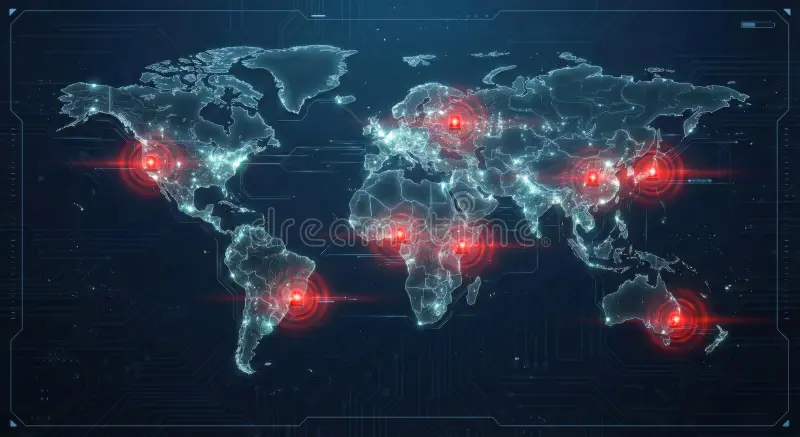
Singapore serves as a major digitalized financial and data center hub in the Asian Pacific region [2]. However, in recent years, Singapore has seen a surge in cyberattacks both in scale and sophistication. Though there is great digital connectivity across financial systems, government digital platforms, banking, healthcare, transportation etc, which is crucial for economic success, this creates vulnerability. Nowadays, cyber resilience is essential to a nation’s economic stability, geopolitical standing and national sovereignty. According to the latest data from the CSA (Cyber Security Agency of Singapore), 117,300 devices were infected by malware in 2024 an increase of 67% from 70,200 in 2023 [1]. The average cost of recovery from a ransomware attack was US$1.54 million in 2025 [3]. A notable example was in July 2025, when a sophisticated cyber espionage group UNC3886 targeted Singapore’s Critical Information Infrastructure(CII). According to the government, these attacks hampered national security and other services like healthcare and transport [5]. Globally, cyberattacks are increasingly disrupting key industries. In the US, a cyberattack on United Natural Foods Inc(UNFI) in June 2025, one of the largest grocery wholesales, disrupted its digital ordering and delivery system. The economic impact is expected to cost between $350 million and $400 million in lost sales [6][7]. These incidents show how attacks are no longer limited to IT systems but now threaten the nation’s security and economies.
Geopolitical Implications
The potential impact of cyberattacks has reshaped Singapore’s economic priorities, foreign policy and regulatory environment. Singapore’s vulnerability to cyber espionage groups like UNC3886 shows a broader geopolitical trend where cyber operations are being used for gathering intelligence and disrupting strategic capabilities [4].
Iran’s Bank Sepah was breached by the hacker collective “Codebreakers” which stole 42 million customer records and demanded a $42 million Bitcoin ransom [6]. This shows how even government linked institutions are not immune to cyberattacks.
These cyberattacks have led to strong suppression from international blocs. For example, the European Union has strengthened its cyber defense policies by imposing sanctions on individuals or entities involved in cyberattacks even if it targets third party countries. These sanctions include travel bans, asset freezes and other restrictions [8]. This shows a shift toward accountability in cyber space and influencing international cyber diplomacy.
Economic Consequences
The economic repercussions of cyberattacks are huge. Beyond the direct cost of service outages, ransom payments and data recovery, there is also significant reputable damage. In Singapore, cyberattacks could bring entire sectors to a standstill like disruptions to aviation, banking, energy, water or healthcare [10].
Cyberattacks are perceived as the root cause for the disruption of supply chains and international trade all over the world. Due to a cyberattack during the Easter weekend 2025 in the UK, Marks and Spencer was unable to use their online shopping system, which was disabled for six weeks, resulting in a loss of 300 million pounds [6]. This incident shows the link between digital infrastructure and global economies. They not only cause financial damage, but public trust is undermined and vulnerabilities in the third-party contractor access are exposed which forces businesses to strengthen compliance and incident-response protocol. It also leads to higher insurance premiums and regulatory scrutiny. This shows the disruption of customer confidence and supply chain.
Singapore’s Cybersecurity Initiatives
These evolving threats have seen Singapore enhance its cybersecurity posture immensely. It has updated the Cybersecurity Act, which regulates the protection of the nation’s CII, to meet the emerging risks. CII owners are mandated to not only secure their systems but also report a wider range of incidents, one of them being supply chain breaches. A key element of Singapore’s approach is the addition of new categories such as the Systems of Temporary Cybersecurity Concern, through which the cloud services, data centers and other underlying digital infrastructures have been placed under supervision. Such alterations are the indicators of Singapore’s commitment to adapting their cybersecurity strategy to the evolving threat landscape ensuring national resilience [10].
Comparison With International Cyber Norms
When comparing Singapore’s initiatives to international frameworks there are notable differences in the scope and approach. Singapore’s Cybersecurity Act places a strong emphasis on foundational digital infrastructure and CII [10]. In order to minimize disruptions to vital services and emphasize quick responses to threats, the government implemented this sector-specific oversight model. On the contrary, the European Union’s Cyber Resilience Act takes a far more expansive approach by virtually regulating all digital products and imposing more stringent security-by-design and mandatory patching requirements [12]. Furthermore, the EU also strengthens regional defense through coordinated crisis management under the EU Cyber Blueprint as well as sanctions imposed on cyber criminals [13]. The UN Cybercrime Treaty (2024–2025) harmonizes laws and improves cross-border investigations thus supporting collaboration among law enforcements worldwide [14]. Overall, while Singapore’s cybersecurity framework aligns well with international norms, it remains more focused on sector specific security and national sovereignty, whereas the EU emphasizes comprehensive regional regulation and the UN fosters global cooperation.
Broader Implications
Cybersecurity is becoming a central component of the national security of Singapore, since many aspects of the operations in Singapore are dependent upon systems based on digital technology. Advanced cyber threat actors are targeting the CII of key sectors such as banking, energy and transportation with the goal of undermining the public’s trust in vital services. Since Singapore participates in the international frameworks relating to security, it can leverage this participation to improve its defensive posture, besides strengthening its strategic position, considering the cyber threats that are becoming more pervasive and non-discriminatory. A serious cyberattack may have significant financial implications like disrupted public services, supply chains, and lower investor confidence. On the other hand, it creates an opportunity to develop the industry in terms of growth, innovation, and the development of talent.
Conclusion
Cyberattacks pose significant challenges to the international relations, economic stability, and national security of Singapore. The increasing numbers of malware infections, attempted exploits, and incidents of state-sponsored espionage indicate that the cyber threats to Singapore are not only expanding in terms of scope but also in terms of complexity. Singapore’s updated Cybersecurity Act increases regulatory oversight and improves incident response capability, demonstrating a pro-active response to this type of challenge. While Singapore’s policies are well aligned with the normative standards established by both the EU and UN in terms of the protection of CII, Singapore’s policies are uniquely tailored to the specific needs of the critical sectors of Singapore’s economy. In light of the increasingly interconnected world in which we live, Singapore’s digital future will rely heavily on continued cooperation, resilience, and vigilance.
References
[2]https://securityquotient.io/singapore-cyber-threat-landscape-a-2025-outlook
[3] https://www.frontier-enterprise.com/half-of-singapore-firms-pay-ransom-some-bargain-lower/
[6] https://insights.integrity360.com/5-of-the-biggest-cyber-attacks-of-2025-so-far
[10] https://www.csa.gov.sg/legislation/cybersecurity-act/
[11] https://arxiv.org/pdf/2409.11417
[12] https://eur-lex.europa.eu/eli/reg/2024/2847/oj/eng
Implications of Cyber Attacks on Singapore – main objective of the article
- Discuss about recent cyber-attacks in Singapore and internationally to find trends and threats
- Geopolitical, economic, policy consequences: How cyber-attacks influence international relations? What are the economic consequences?
- Singapore’s initiatives (CSA) and compare to international cyber norms and policies (UN, EU)


