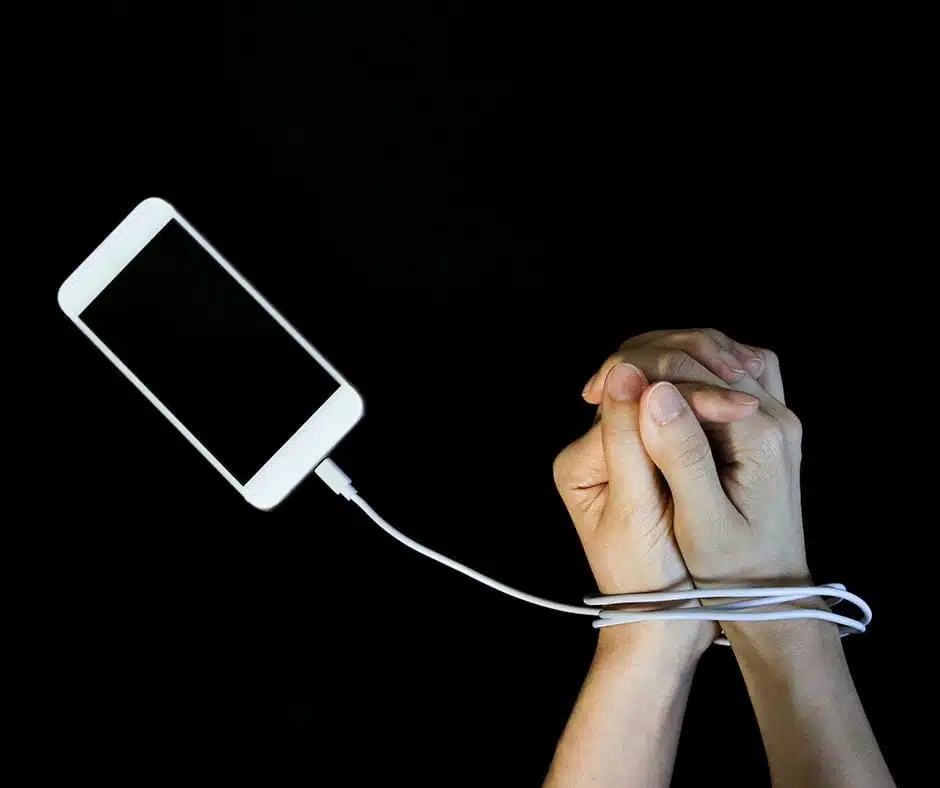
We live in an unprecedented age of connectedness – brought about by globalisation and spurred on by 21st century tech innovation. From Tim Berners-Lee’s invention of the World Wide Web in 1989, to the rise of social media in the early 2000s with the use of MySpace, Facebook and Twitter, staying in touch has never been easier. With mobile phones staying connected with one another is literally just a tap away.
In spite of this, why is it that society has seemingly become less connected? Technology has made it so easy to connect with one another without having to actually meet up face-to-face, that somewhere along the way, people stopped meeting up altogether. Instead of hanging out in person, we choose to text or call from the comfort of our homes. We joke that things were better before technology took over. Ironically, in a world built with constant connection, social isolation feels more common than ever.
In Japan, social isolation presents itself in a societal issue termed “Hikokomori”, where individuals, typically young adults, engage in severe social withdrawal, choosing to coop up in their homes and not participate in society for months or even years. These people do not ever leave their houses, staying at home watching TV shows, playing video games, doom scrolling on the internet or reading online content. They often rely on parents or caregivers to provide for them while they engage in this extended period of social withdrawal, mainly in providing money for food and basic needs.
Many factors contribute to this social withdrawal—societal expectations surrounding one’s career and academics, the struggle to fit in or fear of disappointing one’s family. This can push some people towards withdrawal rather than confront the perceived shame one would face in society. A phenomenon that began in the 1990s, eventually became much more prevalent in the early 2000s, largely due to the rise of the internet. While the internet alone doesn’t cause this isolation, it has made it easier to sustain. A recent study found that more internet and device use correlates with stronger Hikokomori tendencies. They also found that Hikokomori is frequently associated with addictive behaviours around digital technologies such as online gaming and social media use. The internet, social media, and online entertainment provides these people with a place to hide away in—physically away from the rest of the world, while still feeling entertained or loosely connected—making it so much easier to become a Hikokomori.
Hikikomori highlights a wider issue seen across society, not limited to Japan: when online connection becomes easier than offline interaction, social withdrawal can slowly start to feel normal. While it may not be as extreme as Japan’s Hikokomori culture, other countries such as the US and UK are experiencing what is termed a ‘loneliness epidemic’, where despite widespread social media use, many people report having fewer close physical friendships compared to past decades. Phones have effectively replaced common social spaces like parks, cafes, libraries and even malls. In the current digital age where everything can be done online, they believe that there is no longer a point in physically going out. The rising work-from-home culture has also further reduced everyday face-to-face interaction; office gossip, shared lunches and commuting. What was initially fueled by the COVID-19 pandemic, has become a mainstay work feature, with many companies now offering at least one day of work-from-home as part of their weekly schedules. While companies still try to retain the ‘office’ part of work, many people have become so accustomed to remote work that it has become one of the required working conditions in their search for employment. Over time, the lack of routine social contact in long term remote work may contribute to feelings of social detachment and reinforce patterns of withdrawal, similar to those seen in Hikokomori culture.
Social media promises connections, but fosters unhealthy shallow interactions—likes, follows and off-handed comments. People tend to show a carefully curated version of themselves, one that only shows the good and hides the bad, seeking validation in likes, comments and followers. Constant exposure to these idealised portrayals can fuel social comparison, resulting in feelings of inadequacy, low self-esteem and anxiety. These negative feelings can encourage social isolation because some people may feel like they are ‘lacking behind’ or do not live up to perceived societal expectations.
Across the world, there has been a notable decline in mental health, and social media is increasingly seen as a contributing factor. The World Health Organization reported over a billion people living with mental health disorders in 2025, with anxiety and depression championing these numbers. Research also suggests that early exposure to technology plays a role. A 2023 study done by Sapien Labs found a correlation between technology and mental health—the younger the initial exposure to a smartphone, the higher the odds of developing a mental health disorder in adulthood. Children are highly impressionable, and the early exposure to social media normalises comparison, reinforcing patterns of low self-esteem and anxiety from a young age.
Personally, while I am not that avid of a social media user, I do fall victim to the social comparison that I draw looking at the digital lives of my friends. Seeing their posts on their travels and adventures makes me feel slightly unaccomplished, but more often than not, envious. We all fall prey to this instinctive feeling of being left out, commonly known as FOMO—the fear of missing out. Sometimes, this feeling can be overwhelming, which may cause us to unknowingly withdraw from society. COVID-19 has also further exacerbated the loneliness epidemic. Since the pandemic, social isolation has become more prevalent than ever. We have become so accustomed to staying home that even now, we choose to socially isolate over going out. I go out a lot less now, can barely count the times I met up with friends or even had a conversation worth remembering. Phones and digital spaces have effectively replaced the common social places we once relied on—cafés, parks, malls—making it easier to stay connected online while avoiding real-world interaction.
And the feeling of being left behind isn’t just online—it’s also reflected in the post-COVID economy in Singapore. Companies have reduced headcount, making it harder than ever to find jobs, especially for postgraduates. The shift in expectations, from certification to experience, has also become another obstacle for the generation that spent their formative years in a global lockdown. Sometimes, it feels as if the world has moved on while we are stuck in 2019. Increased cost of living and career uncertainty while watching the lives of friends who have ‘made it’ online only adds to feelings of inadequacy, reinforcing social isolation and mental health decline.
In the end, we live in a hyper contradictory world. Technology and social media promises connection, but we ironically lack it now more than ever. Rather than enhancing interpersonal relationships, it deepens feelings of isolation, anxiety and inadequacy. Phones have taken over and replaced common places that used to build communities, while economic pressures, societal expectations in a post-pandemic world makes real-world interactions much harder. As we scroll through our social media feeds, we eventually realise we’re slowly being left behind while the world moves on. Social isolation and declining mental health is not just an individual problem, but has become societal. The challenge ahead is learning to balance digital life with real-world interaction, so connection becomes meaningful, not just a feed of likes and FOMO.

Author

You may also like
-
The Imperial Executive: Adaptation or Democratic Risk?
-
The new ‘safe’ risk: Gen Z are treating careers like startups
-
Cybersecurity In Singapore: Navigating Global Threats and National Resilience
-
Degrees in Limbo: How 2026 Is Quietly Redrawing the Map of Studying Abroad
-
The Conveyor Belt that is the 21st century labour movement
